
Your customer asks, “Can you deliver in every Canadian province?”
Canada is the single largest export market for U.S. goods, with about C$3.6 billion in goods and services crossing the border each day. Trucks do most of the heavy lifting, carrying 67% of surface freight between the U.S. and Canada. So when your shippers push north, you feel it fast.
But crossing the border is only the start. The real challenge is what happens after clearance: getting freight into the right Canadian city, hitting delivery windows, and keeping tracking and proof of delivery consistent across regions. This post explains Canada Terminal Network Coverage in plain language, then lays out a province by province rollout plan you can actually run.
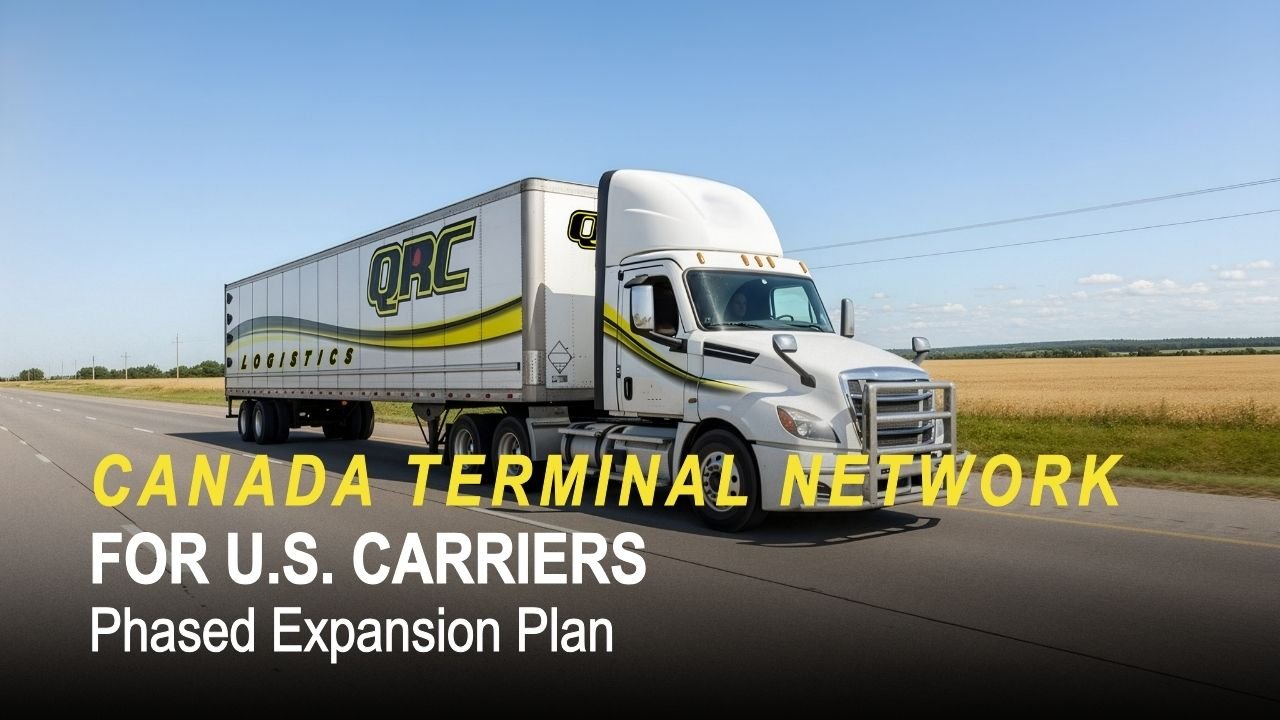
What This Guide Covers
- Defines how cross-border freight actually moves inside Canada after customs, from the first handoff through hub transfers to local delivery.
- Walks through a practical, province-by-province rollout plan, starting with Ontario, then Quebec, followed by Atlantic and Western Canada.
- Explains the operating standards that must stay consistent as coverage expands, including transit times, appointment handling, tracking, and POD.
- Identifies common failure points in Canada expansions and shows how a phased, coordinated network prevents service erosion.
How Cross Border Freight Moves After Customs
Forget the buzzwords.
When we talk about terminal network coverage, we mean one practical outcome: your freight hands off once at the border (or first Canadian hub), moves on scheduled linehaul between major hubs, and finishes on local delivery without you building a Canadian footprint from scratch.
Picture a normal Tuesday night.
A U.S. driver crosses at a busy border point, pulls into a secure transfer dock, and drops the Canadian freight. Our team checks it in, sorts it by destination, and stages it for the next move. By morning, Ontario deliveries are already on local trucks, and Quebec freight is on the road to Montreal.
That flow works when four pieces line up.
Where Your Freight Enters the Canadian Network
You need a reliable handoff point close to the border or close to the first major metro your freight serves.
Sometimes that is a secure transfer dock near the crossing. Sometimes it is a primary hub near Toronto or Montreal. Either way, your freight needs a controlled, repeatable process for paperwork, check in, and sorting.
The goal stays the same: your shipment crosses once, then moves like a domestic Canadian shipment from that moment on.
How Freight Moves Between Hubs
Canada is big, so the middle portion matters.
A strong network runs scheduled overnight or multi day linehaul between hubs. Think of it like predictable transfers that connect Toronto to Montreal, Montreal to the Atlantic region, and Ontario to the West.
When those middle moves run on a fixed schedule, you can publish transit times you can keep. Your customers feel the difference.
How the Final Stop Gets Done
Most delivery pain happens at the door.
Retail locations have appointment windows. Some locations require a call ahead or a booked delivery time. Smaller businesses may not have docks, so the driver needs equipment to unload safely.
This last step is where service quality is won or lost, because local drivers understand local routes, local receiving habits, and local winter realities.
How You Keep One Operating Standard
This is the part that saves your operations team.
When you work with one coordinated Canadian partner, you do not train your staff on multiple regional rulebooks. You get one way of doing things: tracking updates, appointment booking, proof of delivery, and exception handling.
Predictability reduces surprises for your team and your customer.
What Counts as a Terminal Network
Here is the problem with “Canada wide coverage” claims.
A lot of companies are really describing a phonebook. A handful of carriers. A few emails. Some loose handoffs.
A terminal network is different. It has structure. It has rhythm. It has rules everyone follows.
A real terminal network includes:
- Cross dock terminals – Not yards, not parking lots. Working docks where freight gets received, scanned, sorted, and staged for the next move.
- A linehaul schedule you can point to – Real departure times between hubs. If the Toronto to Montreal move only happens “when it fills,” you do not have predictability. You have hope.
- Final stop capacity that matches the freight – Local trucks, the right equipment, and drivers who know how to hit appointment deliveries and dockless locations without turning it into a fire drill.
- One way to handle damage and shortages – A claims process with clear documentation and one escalation path, so the customer is not stuck watching two regions argue about who touched it last.
- One billing playbook – The same accessorial rules, the same rating logic, the same invoice structure. Otherwise your ops team wins the delivery and loses the relationship on the back end.
- Proof of delivery that stays consistent – Scans that happen when they should. PODs that arrive the same day. Timestamps and signatures that do not change based on which province delivered it.
If you have all of that, you have a network. If you do not, you have a collection of carriers.
Why Most Canada Expansions Fail Without a Phased Launch
Canada expansion often breaks for one reason: a carrier tries to cover everything at once, then service quality drops in the lanes that are hardest to run.
A staged launch fixes that.
You start in the provinces where your customers already ship the most. You build weekly rhythm. You learn receiver patterns. Then you extend the footprint only when you can keep the same level of reliability.
Here is the phased path we see work best for U.S. carriers.
Phase 1: Start in Ontario Because the Demand Lives Here
Ontario gives you the fastest return on effort.
Ontario is Canada’s largest province by population, with about 15 million residents, and it accounts for roughly 40% of Canada’s total imports. If your customers sell into Canada, a large share of their Canadian demand usually lands in and around the Greater Toronto Area (GTA).
What a Strong Ontario Setup Looks Like
Anchor near Toronto. The GTA functions like a magnet for freight. It also gives you reach across Southern Ontario, plus an easy bridge into Quebec.
At QRC Logistics, our main warehouse is a 300,000 sq. ft. warehousing and distribution facility in Halton Hills, Ontario, positioned near Toronto Pearson and Highway 401. That location matters because it shortens the gap between “freight in our hands” and “freight on a local truck.”

Run frequent departures. Ontario volume often supports daily moves early in your rollout. Frequency matters more than most people expect. Weekly service creates delays. Daily or near daily service creates trust.
Treat appointments as core operations. Ontario retail deliveries can run on tight windows. If a truck arrives late or outside the booked window, receivers can refuse the shipment and push it days out. The best prevention is to run appointment booking like a primary workflow, not an afterthought.
A Simple Ontario Reality Check
Ask yourself this: how many Ontario deliveries are going to locations without docks?
That one question changes your plan. A network that handles Ontario well needs the right mix of local trucks and unloading equipment, because many store level deliveries do not look like a clean warehouse to warehouse drop.
We built our Ontario operation around time specific retail deliveries, including set delivery times like 9:00 a.m., noon, and 5:00 p.m. We also support fast turn options such as same day service (orders called in by 11:00 a.m. delivered by 5:00 p.m.), a three hour rush option, and overnight (pickups called in by 3:00 p.m. delivered by 5:00 p.m. next day). Those details reflect what Ontario receivers actually demand.
Phase 2: Add Quebec to Reach Over 60% of Canada’s Population
Quebec usually comes next for one reason: it adds a lot of reach quickly.
Quebec has about 8.5 million people, and together Ontario and Quebec represent over 60% of Canada’s population and GDP. If you serve both provinces well, you can often tell your customer, honestly, “Yes, we can handle most of your Canadian demand.”
What Changes When You Add Quebec
Montreal becomes your next key hub. Toronto to Montreal is about 335 miles, which supports a practical overnight move that feeds next day deliveries in the Montreal area.
Language matters. Quebec is predominantly French speaking. Even if your shipper speaks English, the receiver might prefer French for delivery calls, notes, and paperwork. A good partner handles that without friction.
Weather and traffic punish loose scheduling. Montreal traffic and winter storms can turn a “perfect” plan into a missed appointment. This is where tighter cutoffs pay off. If Quebec deliveries depend on a middle of the night departure, you cannot load late and hope for the best.
The Quebec Question You Should Ask Early
Do your customers have receivers in Quebec who enforce strict appointment windows?
Many do. Large Canadian retailers and grocery networks often run the same style of receiving rules in Quebec as they do in Ontario. If your rollout relies on “we will just show up,” it will break.
When you add Quebec, you need the same discipline you built in Ontario, plus bilingual support and winter ready planning.
Phase 3: Extend Into Atlantic Canada With Clear Delivery Promises
Atlantic Canada is smaller in population, but it still matters for national programs.
The Atlantic provinces together account for roughly 2.4 million people, about 6-7% of Canada’s population. Many U.S. shippers need to reach these provinces to support national retail programs, specialty distribution, or ecommerce demand.
What a Practical Atlantic Rollout Looks Like
Use a regional hub. Many networks use Moncton, New Brunswick or Halifax, Nova Scotia as a regional sorting point, then run local routes from there.
Plan for longer distance. Toronto to Halifax is about 1,100 miles, so a realistic plan for shared trailer freight is often a two day middle move plus local delivery on day three.
Expect spread out routes. Appointment density is usually lower than Toronto or Montreal. Stops can be farther apart. Halifax to Moncton is roughly a 2.5-hour drive, and that is only one example of how the geography stretches a route.
That spread affects how you schedule delivery days. Early on, you may serve certain areas on specific days of the week while volume builds. That is normal, as long as you communicate it clearly.
Atlantic Canada Adds Two Variables
Weather can shut down roads. Snowstorms and high winds can close key routes.
Some freight needs a ferry leg. Newfoundland deliveries often add ferry or air moves, plus extra handling. If you plan to serve Newfoundland, ask your Canadian partner how they manage ferry space, timing, and exceptions when weather disrupts sailings.
Customers in Atlantic Canada often accept longer transit. They do not accept “we do not know where it is.”
Phase 4: Add Western Lanes Without Blowing Up Service Levels
Western Canada is a big market over a big footprint.
The western provinces represent roughly 11 million people, with major hubs like Winnipeg, Calgary and Edmonton, and Vancouver. Depending on your customers, Western Canada might come earlier in your rollout. But for many carriers, it comes after Ontario and Quebec are running smoothly.
What Makes Western Canada Different
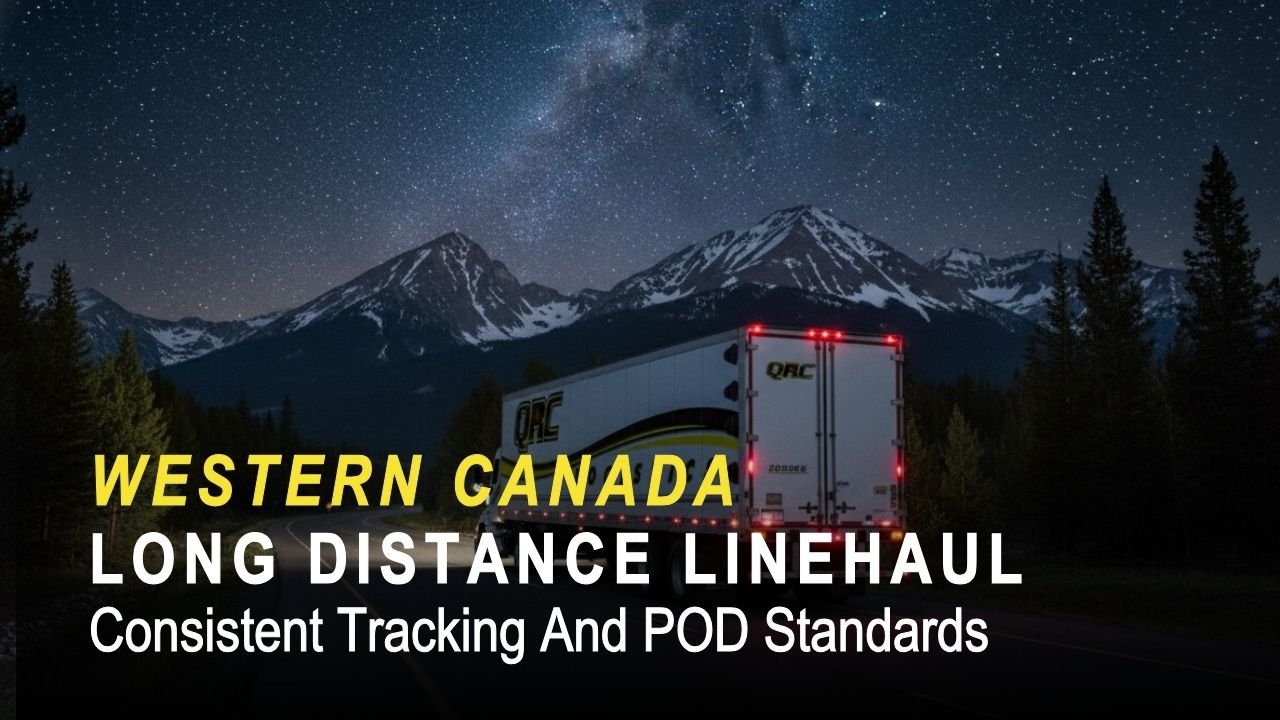
Distance forces honest transit times. Toronto to Vancouver is about 2,700 miles (4,300 km). A truck move often takes about four days on the road. Rail plus truck options can land in a five to seven day range.
You can run faster than that in some cases. But you should publish what you can hit consistently, not what you can hit on a perfect week.
Mountains and winter change the plan. Routes into British Columbia can include mountain passes that close or slow in winter. Prairie winters can be extreme. If you ship temperature sensitive goods, you need equipment and processes that match the season.
Remote areas require coordination. Some northern or rural areas have limited direct coverage. A strong partner can still serve those locations by coordinating local capacity behind the scenes. The key point: you should not have to manage those local relationships yourself.
Keeping Standards Consistent Coast to Coast
By the time you add Western Canada, your customer starts using one phrase: “We need Canada wide service.”
That promise only works if your tracking, delivery rules, and proof of delivery standards stay consistent from Vancouver to Halifax. That is why many U.S. carriers prefer one Canadian partner that coordinates the whole move, even when the physical delivery provider changes by region.
The Five Settings That Keep New Region Service Predictable
Every expansion phase comes with the same operational pressure points. You can keep service steady if you set these five items before you open a new province.
Set Transit Times Lane by Lane
Next day delivery can work inside Ontario and in parts of the Ontario to Quebec corridor. Atlantic Canada often needs a few days. Western Canada can run a week for standard shared trailer freight.
If you publish one blanket promise like “two days anywhere,” you will eventually miss it. Instead, build lane specific transit times based on distance, weather risk, and how many transfers happen in the middle of the trip.
Build Cutoffs Backward From the Departure
A cutoff is simply the time your freight must be in the dock to make the next scheduled move.
Set that cutoff based on the real schedule. If the truck to Montreal departs at 9:00 p.m., you need time for unloading, sorting, scans, and trailer loading. If you plan Atlantic moves twice a week, you need stricter cutoffs on those departure days.
Earlier cutoffs feel inconvenient. Missed cutoffs feel expensive.
Centralize Appointment Booking
Appointment booking is not admin work. It is reliability.
Receivers in major metros often reject late arrivals. Some will reschedule you days out. When that happens, your customer blames you, not the receiving policy.
One partner, one appointment workflow, one standard for delivery notes. That is the cleanest way to keep execution consistent as you add provinces.
Plan for Local Quirks Before They Surprise You
Quebec holidays differ from U.S. holidays. Atlantic routes get hit by storms and ferry schedules. Western Canada runs on multiple time zones.
You can handle all of that if you write short region notes your dispatch team can use without guessing. Think of it like a one page “how this region works” guide.
Track the Same Scoreboard Everywhere
You need one simple scoreboard across provinces:
- On time delivery percentage
- Appointment hit rate
- Claims and damage rate
- Customer complaint volume
Track it the same way in Ontario as you do in British Columbia. When you see a dip in one region, you can fix it fast.
Common Failure Points
Most Canada expansions do not blow up because the distance is too far.
They blow up because a few small things go wrong, over and over, until your customer stops believing the promise.
Here are the usual culprits:
- Missed appointment windows – One late arrival can turn into a two day reschedule. Receivers do not care that the border was slow. They care that the truck missed the slot.
- Inconsistent scans and POD – Your freight is delivered, but tracking still looks “in transit.” Then your customer starts calling. Then your team starts digging. All because scans did not happen on time or POD did not land cleanly.
- Lane promises that are not backed by a real schedule – Transit times get sold like the best week of the year. But the linehaul does not depart when the quote assumes it will. The first few moves feel fine, then the misses start stacking.
- Accessorial surprises – Liftgate. Inside placement. Limited access. Call ahead. These are not rare in Canada, especially at the store level. If you do not plan for them up front, you either eat cost, miss service, or both.
None of these are complicated problems. They are discipline problems. And the fix is usually the same: stop guessing, set the standards, and run the same play every time.
The Data You Should Pull Before You Add a Province
Expansion works best when you know the shape of demand.
Before you open a new province, we recommend pulling a simple pre launch data pack that answers these questions.
How Much Freight Do You Really Have?
Break it down by lane and frequency.
For example: “We ship 10 pallets per week to Montreal, four per week to Halifax, and two per week to Calgary.” That one line tells you whether you can support scheduled departures or whether you need consolidation first.
Where Do the Deliveries Actually Go?
Map the delivery addresses.
Do you ship mostly to one distribution center in Montreal? Or do you ship to 50 stores scattered across Quebec? A concentrated map supports one hub strategy. A scattered map demands broader local coverage.
What Do Receivers Expect at Delivery?
Ask your customer about delivery windows, receiving rules, and special requirements.
Do receivers require booked appointments? Do they only accept deliveries between 9:00 a.m. and 3:00 p.m.? Do they refuse freight without a reference number on the paperwork? Those details decide whether you hit your service promise.
What Extra Services Show Up Often?
List the extras your deliveries regularly require, such as:
- Liftgate unloading
- Inside placement
- Phone calls before delivery
- After hours access
- Handling for fragile or high value goods
Different provinces can have different patterns. Smaller businesses and store deliveries often need more hands on unloading than warehouse deliveries.
What Happens at the Border Today?
Border performance can make or break your Canadian plan.
Track how often paperwork issues delay clearance, which ports you use most, and what causes exceptions. If you plan to grow Canadian volume, you also need a customs process that scales, including pre filed paperwork and secure facilities that keep freight moving without bottlenecks.
What Will It Cost, All In?
Compare your current spot costs to a structured Canadian program.
Also look for add on costs in certain regions, such as ferry fees for Newfoundland or remote area charges for far north deliveries. The best time to price those is before you promise a customer a flat rate.
Patchwork Carriers vs One Coordinated Canadian Partner
You have two options when you expand north.
You can build a patchwork of regional carriers. Or you can hand your Canadian freight to one partner that coordinates the whole move.
The Patchwork Option Creates Hidden Work
Canada’s freight market is often described as having very few truly national less than truckload carriers, with many providers focused on specific regions. That reality pushes U.S. operators toward patchwork coverage.
Patchwork can work. It also creates problems you feel every day:
- Multiple tracking systems
- Multiple billing rules
- Multiple customer service teams
- Different delivery standards by region
Your shipper does not care which region caused the delay. They judge you by the outcome.
One Partner Keeps Canadian Execution Simple
A coordinated partner gives you:
- One operating model
- One tracking view
- One escalation path
- One set of delivery standards
That matters more as you add provinces. Growth should not force your team into multiple playbooks.
At QRC Logistics, we built our reputation on time sensitive, appointment driven retail delivery, then extended coast to coast execution through a national partner network. We have operated since 1978, and we run from an Ontario base designed for high volume retail flow. We also support national rollouts, including one program where promotional kits reached 78 retail locations across Canada within a three day launch window.
That kind of execution is not about marketing language. It is about process, cadence, and accountability.
Build a Repeatable Canada Program
A strong Canada expansion feels calm.
You start in Ontario, where demand and imports concentrate. You add Quebec to cover the majority of Canadian population and economic activity. You extend into Atlantic lanes and Western lanes when volume supports predictable schedules.
The goal is simple: keep service quality steady while your footprint grows.
If you want a province by province rollout plan based on your real lanes, book your Partner Roll In Audit, or download the Canada Partner Roll In Audit + Integration Kit and send it back once completed. Either way, we will review your volumes, consignee map, and service requirements, then build a rollout sequence, cutoff plan, and integration path that matches how Canada actually moves.
