Your container clears customs in Toronto. And then… silence.
The cartage company says they picked it up. The warehouse has not confirmed receipt. Your client wants an update, and you are calling three different numbers hoping someone picks up.
Sound familiar?
That gap between “container released” and “delivered to customer” is where freight forwarders lose sleep. Lose time. And sometimes lose accounts they spent years building.
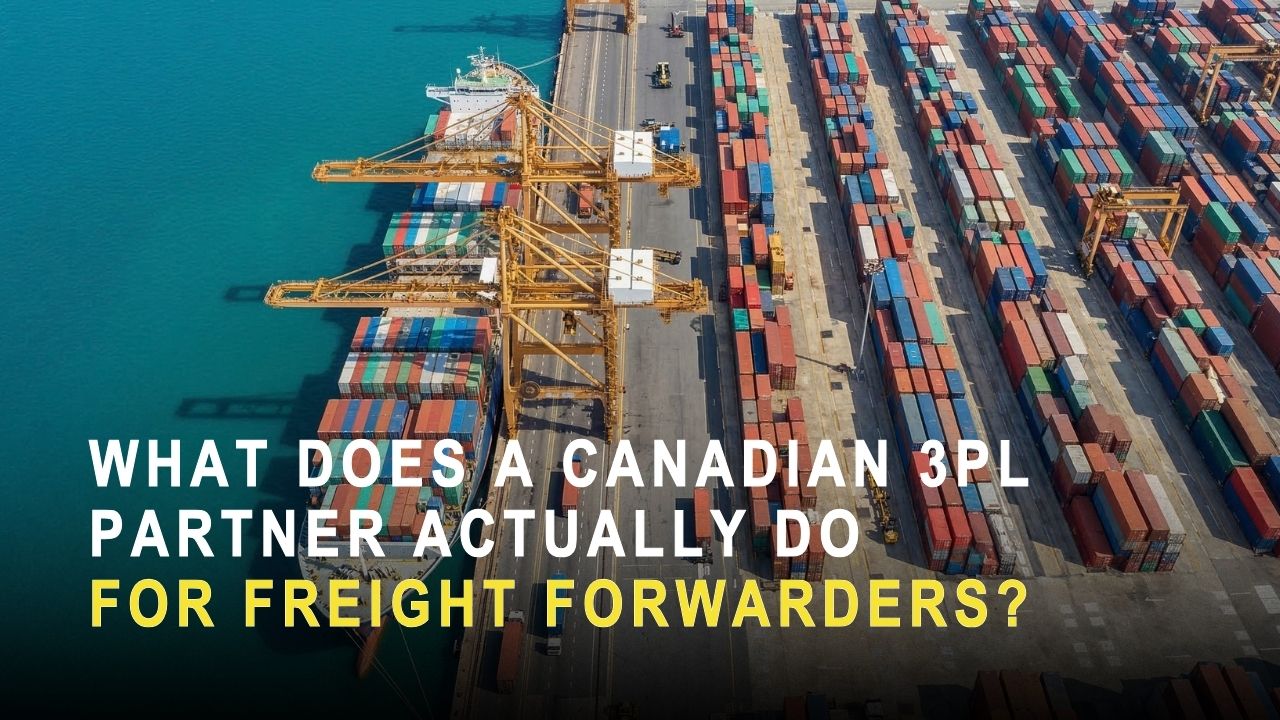
A Canadian 3PL is the company that fills that gap. Not with promises. With trucks, warehouse floors, and a team that picks up the phone when your client’s freight is on the line.
But here is the thing most freight forwarders get wrong: they assume a 3PL is just another vendor. Another name in the spreadsheet. Another invoice to reconcile.
The right one is not a vendor at all. It is a Canadian logistics partner that operates as an extension of your business on the ground.
Before we get into how that works, here is what freight forwarders typically want to know about a Canadian execution partner.
QRC at a Glance
- Canadian owned and operating since 1978
- 300,000 sq ft logistics facility in the Greater Toronto Area
- PIP-approved warehouse for secure cross-border freight
- Asset-based fleet serving Southern Ontario
- Operational coverage in Toronto and Montreal
This post will show you what a Canadian 3PL partner actually does, where the value sits, and how to spot the difference between a real execution partner and a broker wearing a 3PL label.
TL;DR
- If you are managing separate Canadian vendors for cartage, warehousing, and delivery, you are paying for blind spots every time something goes wrong.
- A Canadian 3PL consolidates that entire chain under one roof, with one team accountable from port, rail, or border transfer to customer door.
- Before you sign with anyone, ask two questions: do they own their trucks and warehouses, and will they commit in writing to never soliciting your end customer?
- If your current setup already gives you full visibility and one number to call, you may not need a change. If it does not, keep reading.
You Are the Freight Forwarder. The 3PL Builds the Last Mile.
You already know your job. You book carriers, manage documentation, and get freight across borders. That is your expertise.
A Canadian 3PL picks up where your expertise ends.
Once that freight hits Canadian soil, the 3PL handles everything on the ground. Destuffing. Warehousing. Sortation. And final-mile delivery to your end customer.
Think of it like a concert tour. You are the booking agent who plans the cities, secures the venues, and maps the route. The 3PL is the local crew that shows up at each stop, unloads the trucks, sets the stage, and makes sure the show goes off without a hitch.
Without that crew, you are hiring stagehands, sound techs, and roadies in every city and hoping they all show up on time.
Which brings us to the part you already know too well.
The Vendor Juggle That Is Costing Freight Forwarders More Than They Think
Without a dedicated Canadian 3PL, you end up stitching together three or four local vendors. One for cartage from port, rail terminal, or border transfer. One for warehousing. One for delivery. Maybe a fourth for sortation.
Four vendors. Four systems. Four companies that have never met each other.
Every handoff becomes a blind spot.
The cartage provider drops the container at the warehouse. The warehouse processes it on their own timeline. The delivery company picks up when they are scheduled. Nobody is tracking the full chain from container door to customer door.
Then something goes wrong.
The cartage company blames the warehouse. The warehouse blames the delivery company. And you? Your client is calling you about a missed delivery before you even knew there was a problem.
Now you are scrambling to figure out why their freight is sitting in a yard somewhere in Mississauga instead of on a store shelf in Markham.
That phone call is the real cost.
Not just the late delivery. Not just the service failure. It is the hours you spend coordinating vendors and chasing updates instead of building new lanes or growing the accounts that actually move your business forward.
A single partner responsible for the chain gives you one accountable team when something needs attention.
What Changes When a Freight Forwarder Has One Canadian Partner
Imagine this instead.
Your container arrives in Toronto. One company destuffs it, sorts it, stores it if needed, and delivers it to your customer’s door. With tracking. With proof of delivery. With one number to call if anything needs attention.
Here is what that looks like operationally.
How the container actually moves through a Canadian 3PL
- Freight cleared and released from port, or border transfer
- Cartage pickup and delivery to the QRC warehouse
- Container destuffed and freight checked in
- Freight sorted by SKU, customer, or store requirements
- Freight staged or cross-docked depending on delivery timing
- Route planning and delivery scheduling
- Final-mile delivery with proof-of-delivery sent to the freight forwarder
Instead of coordinating multiple vendors, the forwarder communicates with one operations team responsible for the entire execution chain.
Our Freight Forwarder 3PL Services in Canada
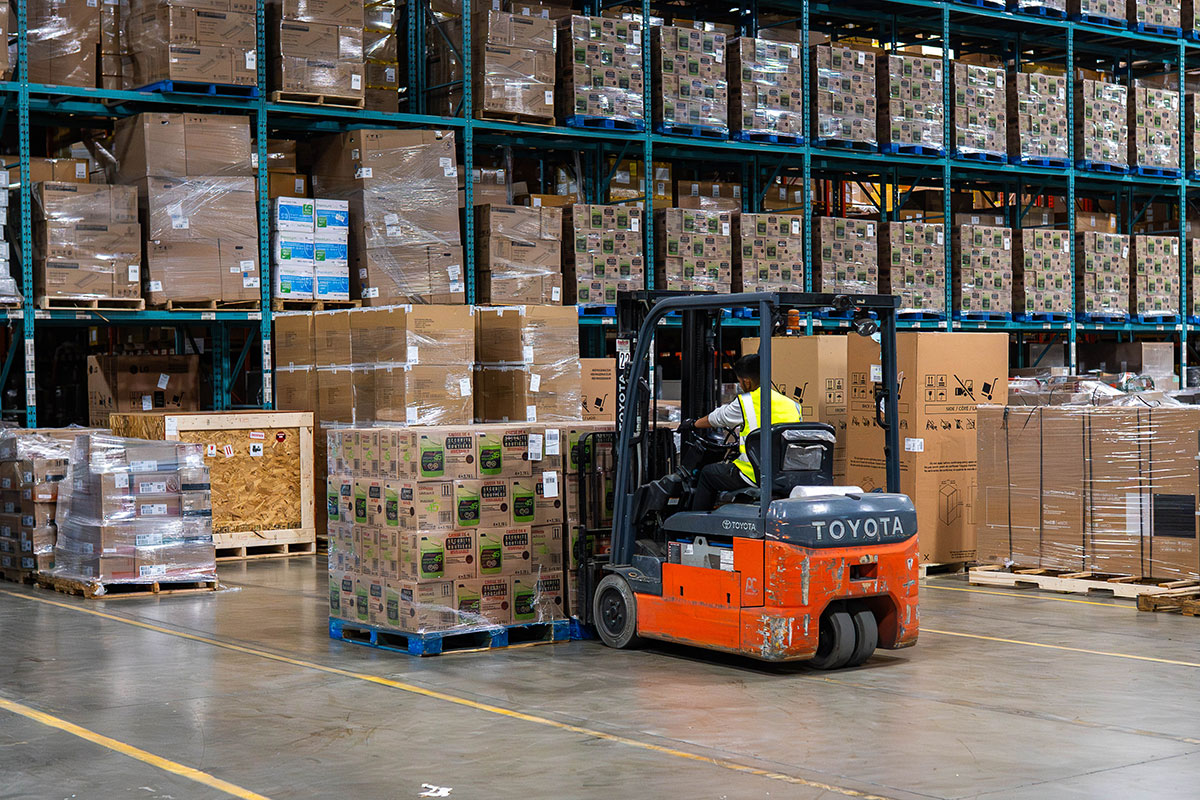
Container destuffing
Floor-loaded or palletized containers are unloaded and staged at our facility so freight can move directly into cross-dock or short-term staging.
300,000 sq ft facility
Cross-dock capacity for fast-moving freight and short-term storage when shipments need to be staged before delivery.
Sorted to your customer’s spec
Freight can be organized by SKU, store, route, or customer requirement before leaving the dock so deliveries arrive exactly how your client expects them.
Asset-based fleet
Deliveries across Southern Ontario are handled by our trucks and drivers, with tracking and proof-of-delivery reporting available for freight forwarders.
Cross-border readiness
Our warehouse is PIP-approved and experienced with cross-border freight documentation so import freight can move quickly from border transfer or port to final delivery.
One organization. One point of contact. One team responsible for the outcome from container door to customer door.
You stop chasing updates. You start confirming deliveries.
The Fear Nobody Talks About (But Every Freight Forwarder Feels)
Let’s name it.
What if the 3PL you hire starts going after your customer directly?
It happens more often than the industry likes to admit.
A 3PL sees the volume flowing through their warehouse. They know the freight profile. And some companies will approach the end customer directly.
That fear is legitimate.
Before signing with any Canadian 3PL, ask this question clearly.
Will you commit in writing that you will never solicit my end customer?
The right partner operates as an extension of the freight forwarder, not a competitor. Your customer remains your customer.
If a 3PL hesitates to answer that question directly, that tells you a lot about how they see the relationship.
Asset-Based or Broker Model: The Question Every Freight Forwarder Should Ask
Here is a simple test. Ask the 3PL: do you own your trucks?
Asset-based 3PL
Owns the trucks and warehouse operations. Execution and accountability stay within one organization.
Broker-model 3PL
Subcontracts each leg of the move. Coordination happens in the middle, but execution is spread across multiple vendors.
When something goes wrong, accountability becomes harder to track.
Asset-based partners give freight forwarders direct access to the team actually operating the trucks and warehouse.
As I often say:
“I have got Toronto covered. I have got Montreal covered. If you have something in the two biggest markets in Canada, I want to deliver it.”
No superlatives. Just coverage where freight forwarders need it most.
Toronto and Montreal Coverage
Most freight forwarders moving freight into Canada see shipments routed through Ontario and Quebec markets.
Working with a partner that operates in both Toronto and Montreal means you do not need separate local vendors in each region.
Our Halton Hills headquarters sits near Toronto Pearson airport and major Southern Ontario highways.
Our Montreal operations support freight moving through Eastern Canada.
One partner. Two markets. One operational process.
Fewer emails. Fewer invoices. Fewer surprises.
Final-Mile Delivery in Southern Ontario: Hear It From Me
Real-time tracking and hitting appointment windows are not optional when you are running final-mile in the GTA and Montreal.
Weather, traffic, and tight delivery schedules make this market unforgiving. Here is a short video where I walk through what reliability actually looks like on the ground.
Questions Freight Forwarders Should Ask Any Canadian 3PL
Before choosing a partner, ask these questions.
- Do you own your trucks or broker delivery?
- Do you operate your own warehouse facility?
- Will you sign a non-solicitation agreement protecting my customer relationship?
- Do you provide delivery tracking and proof-of-delivery updates?
- Who do I call if something goes wrong with a shipment?
The answers will quickly tell you whether you are speaking with an execution partner or a coordination broker.
What If Your Canadian Freight Forwarding Execution Just Worked?
Picture this.
You book a container. You send the details to one partner. The next update you receive is a delivery confirmation with proof-of-delivery attached.
No vendor juggling. No guessing where the freight is.
Your clients see you as having strong Canadian capability. You win more lanes because you can confidently say your Canadian execution is covered.
That is what the right Canadian 3PL partner provides for freight forwarders.
Execution. Accountability. Visibility.
If you are ready to simplify Canadian logistics execution, reach out and start the conversation.