If you have ever seen a pickup truck hauling a flatbed trailer loaded with construction equipment down the highway, there is a good chance you were looking at hot shot trucking in action. This fast-growing corner of the freight industry helps businesses move smaller, time-sensitive loads quickly, without waiting for a full tractor-trailer to be scheduled. In this guide, we will break down exactly what the term means, how it works, the equipment involved, and what it takes to succeed in the industry.
TL;DR: Hot Shot Trucking in Brief
- What it is: Hot Shot Trucking is the transport of smaller, time-sensitive loads to a single customer or location, typically using a pickup truck and flatbed trailer.
- Who does it: Most operators work as independent contractors who own their own truck, trailer, and equipment.
- Why it matters: Businesses rely on it for urgent shipments, oversized equipment, and specialized freight that needs to move fast.
- What it takes: Reliable equipment, proper permits and insurance, a commercial driver’s license, and strong route planning.
Defining Hot Shot Trucking
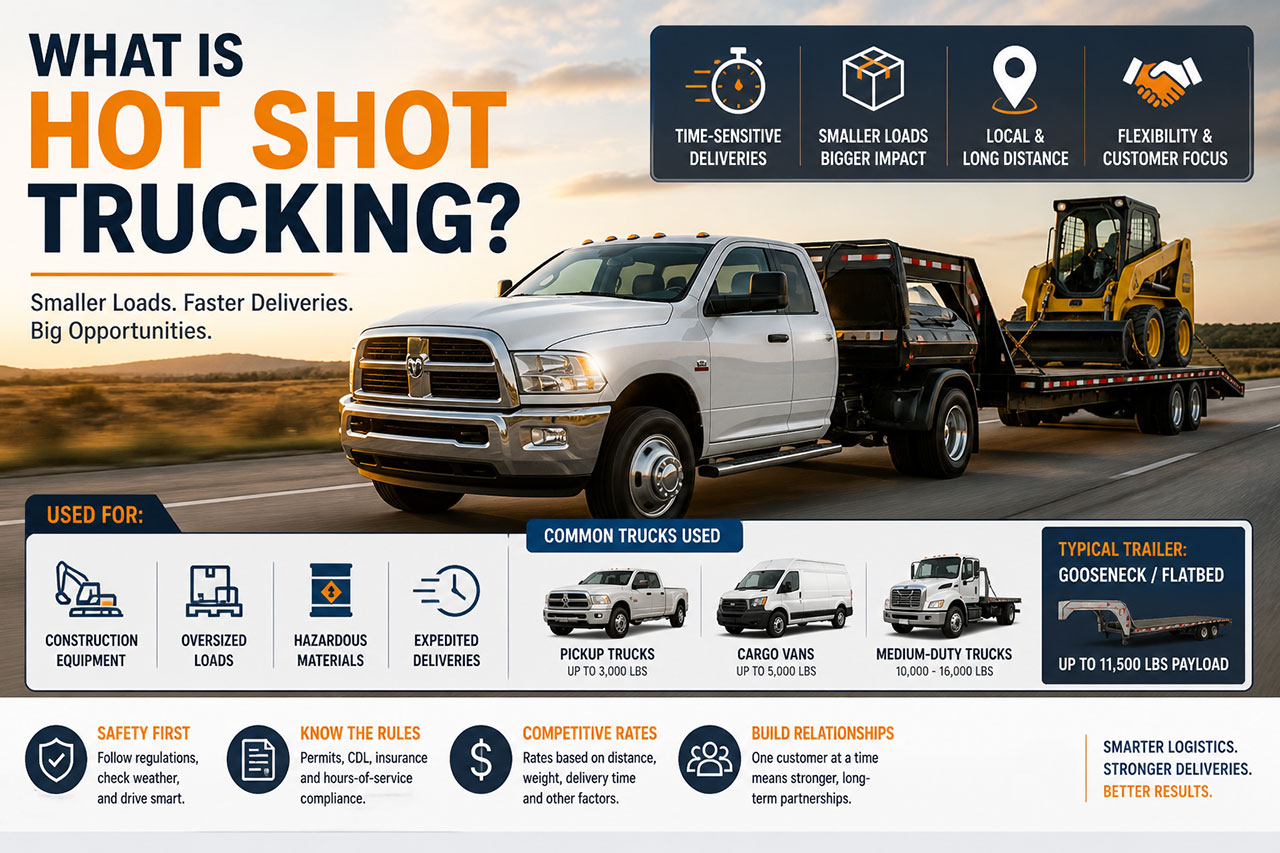
At its core, hot shot trucking involves transporting smaller and time-sensitive loads to a single customer or location, usually with medium-duty trucks and flatbed trailers. Unlike traditional freight transportation, which often consolidates multiple shipments onto one large trailer, this model is built around speed and flexibility. Because loads are smaller and lighter than standard freight, drivers can typically complete deliveries faster and reach locations that larger tractor-trailers cannot easily access.
Companies turn to this style of freight movement for specialized cargo, expedited deliveries, oversized equipment, and urgent shipments. Construction firms, in particular, lean on it heavily to get job site materials and machinery where they need to be, often on short notice. Anywhere a business needs a fast turnaround time without booking an entire truckload, this service tends to fill the gap.
How the Business Model Works
Most drivers in this space operate as independent contractors rather than employees of a large carrier. That means many of them own their trucks, trailers, and equipment outright, and they are responsible for managing their own routes, schedules, and client relationships. This independence is part of the appeal: drivers can choose which loads to accept, negotiate directly with customers, and build long-term relationships with businesses that need reliable, on-demand transportation support.
It also gives drivers a way to enter the freight industry without the overhead of operating a full tractor-trailer fleet. If someone already owns a capable truck, this can be a realistic path into freight transportation with strong income potential, provided they treat it like a real business rather than a side gig. That means researching the market, building a client base, and keeping licensing, insurance, and paperwork current at all times.
Truck Types Used for These Hauls
Because loads vary in size and weight, operators typically choose from a small range of vehicle types depending on the job. Here is a general breakdown of what is commonly used:
- Pickup trucks: Generally handle loads up to around 3,000 pounds, ideal for smaller, lighter freight.
- Cargo vans: Some vans can tow loads up to roughly 5,000 pounds, useful for enclosed or weather-sensitive cargo.
- Medium-duty trucks: Support larger loads ranging between 10,000 and 16,000 pounds.
- Flatbed trailers: Often carry payloads of up to about 11,500 pounds, making them a common pairing with medium-duty trucks.
Requirements and Logistics
Succeeding in this line of work takes more than owning a capable truck and trailer. Most operators also need the right permits, adequate insurance coverage, and a commercial driver’s license (CDL) depending on the weight of the vehicle and trailer combination. Drivers who plan to haul oversized loads or hazardous materials should expect to need additional permits and certifications, and staying compliant with transportation regulations is non-negotiable.
Hours-of-service rules also apply, limiting how long a driver can be on the road each day. These regulations exist to reduce fatigue and improve safety for everyone on the highway. Beyond driving itself, many operators end up managing their own bookkeeping, routing, fuel tracking, and scheduling, which is why a lot of them eventually invest in logistics software or lean on a third-party partner for support.
Safety Considerations for Drivers
Safety has to stay front and center in any hot shot trucking operation, since smaller vehicles hauling heavier loads can be riskier if not managed carefully. A few core practices go a long way toward keeping drivers, cargo, and other motorists safe:
- Never overload the vehicle beyond its rated towing or payload capacity.
- Inspect the load thoroughly and secure it properly before leaving a job site.
- Check weather forecasts ahead of long-distance trips to avoid dangerous road conditions.
- Avoid driving while tired or distracted, and build in regular breaks on longer routes.
Understanding Rates
Pricing in this segment of the freight world depends on several moving parts. Mileage, fuel costs, delivery timelines, cargo type, and total load weight all factor into what a job pays. Most companies and independent operators charge by the mile, then add fees for loading, unloading, or routes that involve tolls. Oversized freight and hazardous materials typically push total transportation costs higher, since they often require special permits or extra care in handling.
Drivers who understand these variables are better positioned to price jobs fairly and avoid taking on work that does not cover their true operating costs. Fuel, maintenance, insurance, and permit fees can add up quickly, so building them into every quote is essential for staying profitable over the long run.
Why Businesses Choose This Type of Freight
For shippers, the appeal comes down to speed and flexibility. Traditional freight can involve waiting for a full truckload or a scheduled route, which is not always practical when a piece of equipment breaks down or a job site needs materials immediately. A dedicated driver going straight to one destination can often turn around a delivery far faster than a shipment moving through a larger network of stops.
This makes the model especially valuable for construction, industrial, and manufacturing businesses that deal with unpredictable timelines. It is also a strong fit for after-hours deliveries, since independent operators tend to have more flexibility in when they run a load compared to larger fleets operating on fixed schedules.
Getting Started as an Owner-Operator
Anyone considering entering the industry should start by researching demand in their target market and understanding the equipment they will need. From there, it comes down to securing the right insurance, permits, and licensing before accepting any loads. Building relationships with shippers and brokers, along with investing in basic routing and bookkeeping tools, helps new operators avoid common early mistakes.
It is also worth learning how this model compares to other freight options, such as dry van truck shipping, so businesses and drivers alike can decide which approach fits a given shipment best. For a broader look at how shipments are planned, tracked, and coordinated from pickup to delivery, this overview of freight management is a useful next read.
How QRC Logistics Supports Hot Shot Operators
At QRC, we understand the day-to-day challenges that come with running an independent freight operation. Our team works directly with drivers and carriers to support reliable, on-time transportation, and we back that up with Canada-wide coverage that helps keep loads moving no matter where they need to go. As a third-party logistics (3PL) provider, we help businesses improve routing, coordination, and delivery efficiency so freight arrives on time and in excellent condition.
If you are ready to simplify your operations and spend more time driving and less time on paperwork, our get started page walks you through how our team can support load coordination, routing, compliance guidance, and scalable logistics services tailored to your business.
Frequently Asked Questions
Is a CDL always required? It depends on the combined weight of the truck and trailer. Many lighter setups fall under the threshold that requires a commercial driver’s license, but once a driver moves into medium-duty trucks or heavier trailers, a CDL and additional endorsements usually become necessary. Checking current provincial or state weight thresholds before accepting a load is always a smart first step.
How is this different from expedited trucking in general? The two terms overlap, but this model specifically centers on smaller loads delivered to a single customer, often using a pickup truck rather than a full tractor-trailer. Expedited freight can involve larger trucks and multiple stops, while this style of hauling is built around speed, flexibility, and going straight to one destination.
Can beginners break into the industry without prior trucking experience? It is possible, though most successful operators bring some background in driving, logistics, or a related trade. New entrants should expect a learning curve around permits, load securement, and pricing jobs correctly, so pairing up with an experienced mentor or a logistics partner early on can shorten that curve considerably.
Final Word
Hot Shot Trucking offers a genuine entry point into freight transportation for drivers with the right equipment, licensing, and drive to run their own business. It rewards operators who stay organized, prioritize safety, and treat compliance as a constant rather than an afterthought. With demand for fast, flexible shipping continuing to grow across North America, drivers who plan carefully and partner with the right logistics support can build a lasting, profitable operation.
Ready to learn more about how the right logistics partner can support your transportation needs? Visit QRC Logistics to see how our team can help your business move freight efficiently, safely, and on schedule.