
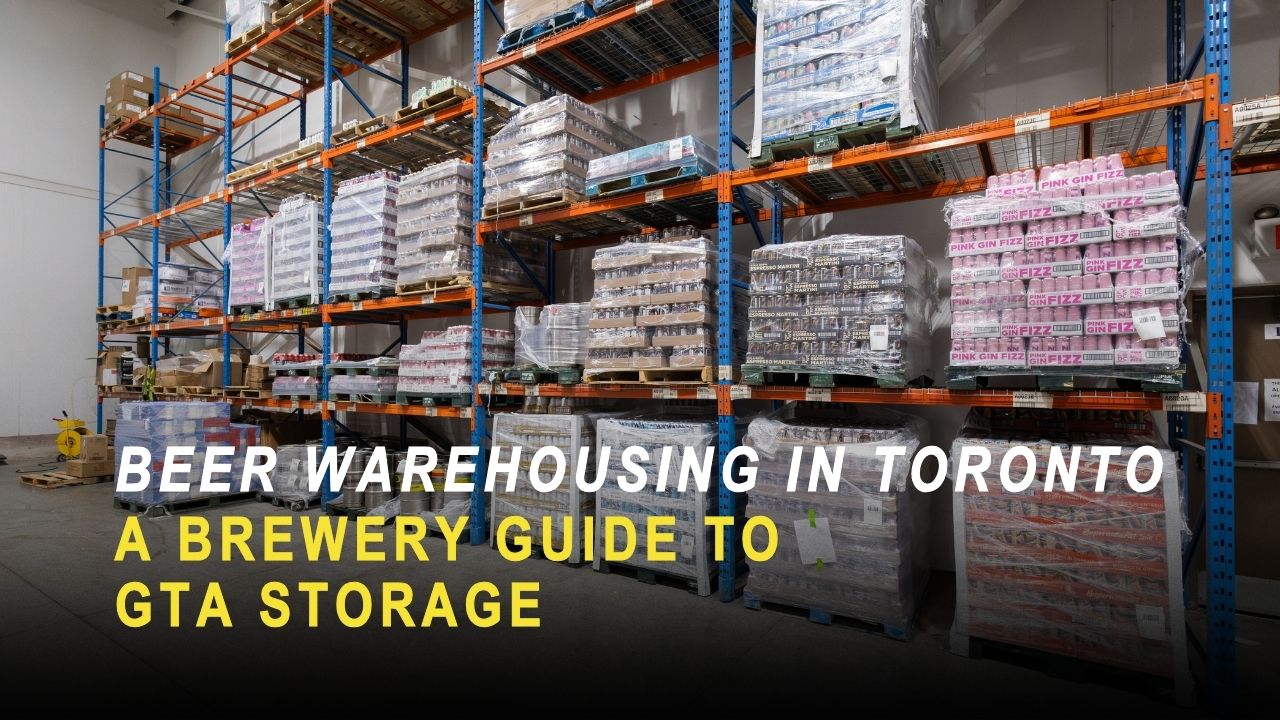
In plain terms, beer warehousing in Toronto means storing, tracking, staging, and releasing your beer from a GTA facility tied to delivery, returns, and keg handling. It keeps your inventory accurate and your accounts served on time.
You did not plan to run a warehouse. You planned to brew good beer and sell it.
But here you are. Cases are stacked near the canning line. Kegs sit by the dock, and nobody is sure which ones are empty. Sales just promised a Toronto account product you are not sure you can ship this week.
That is usually when a brewery starts looking for beer warehousing in Toronto. Not because you ran out of room. Because storage problems turned into delivery problems.
TL;DR
- You need warehousing when storage starts hurting delivery, not just when you run out of room.
- Good warehousing runs the whole loop: receiving, inventory, staging, delivery, returns, and kegs.
- A GTA warehouse near Pearson, close to the 401, 407, and QEW, often beats downtown.
- Before you choose one, know your case volume, keg volume, accounts, delivery windows, and returns.
What Beer Warehousing Actually Means for a Toronto-GTA Brewery
It is easy to picture a warehouse as a bigger room. It is more than that.
Good warehousing covers the whole path your beer takes after it leaves the line:
- Receiving. Product arrives from your brewery or a carrier and gets checked in properly.
- Inventory control. Cases, kegs, SKUs, batches, and account orders live in one clean system.
- Storage. Product is organized so you can pull it without moving the same pallets twice.
- Staging. Orders are lined up by route, account, delivery date, or release.
- Keg handling. Full kegs, empty kegs, returns, and disputed product each get their own workflow.
Storage is the easy part. The hard part is keeping all of it accurate while you keep brewing.
When Brewery Overflow Becomes a Serious Operations Problem
Here is how to tell you have outgrown informal storage:
- Cases get stored wherever there is room. Staff lose time hunting for product and moving it twice.
- Sales does not trust the numbers. So you oversell beer you cannot ship, or sit on beer you could.
- Kegs are stacked with no full or empty split. Recovery slows down and losses get hard to track.
- Delivery prep happens the morning the truck leaves. Cue missed windows, wrong orders, rushed loading.
- Staff keep getting pulled into driving and route planning. Your best people spend the day on logistics.
- Every Toronto account receives differently. Bars, restaurants, and event sites each have their own windows and dock rules.
Which of these is happening right now?
The real breaking point is not running out of room. It is when nobody can say quickly what is available, where it is, what order it belongs to, and when it ships.
Why Toronto and the GTA Change Your Brewery Storage Decision
You might assume the warehouse should sit downtown. Often it should not.
A Toronto-area 3PL warehouse near Pearson Airport supports GTA movement without pushing every shipment through downtown traffic. From there you reach the region and the major highways.
Highway access matters here. When beer needs to reach Mississauga, Brampton, Vaughan, or Oakville, sitting close to the 401, 407, and QEW saves real time.
Then there is the receiver problem. Toronto packs many account types close together, but they do not all receive the same way. Some need appointments. Some need tight arrival times. Some have limited dock access.
The channel mix is wider now too. Since 2024, licensed convenience, grocery, and big-box grocery stores in Ontario can sell beer, cider, wine, and ready-to-drink beverages. That means more account types, pack sizes, and replenishment to manage.
And you may not stop at Toronto. Many breweries add Hamilton, London, Barrie, Kingston, or Ottawa. So “Toronto warehousing” often means a GTA-connected warehouse that grows with you across Ontario.
What Our GTA and Ontario Coverage Looks Like
Here is the reach a Toronto-area beer 3PL should give you. We work from a facility near Pearson, with dedicated GTA trucks and scheduled lanes across the province:
| Where | When product can arrive |
| GTA core (Mississauga, Brampton, Vaughan, Markham, Oakville, Milton, North York, Etobicoke, and more) | Same-day, trucks dispatching 8 AM to 3 PM |
| West (London by 2 PM, Windsor by 11 AM, Sarnia by 11 AM, Cambridge, Kitchener, Waterloo by 11 AM) | Next-day scheduled lanes |
| East (Kingston by 11 AM, Belleville by 1 PM, Ottawa by 1 PM, Peterborough by 11 AM) | Next-day scheduled lanes |
| North and central (Barrie by 11 AM, Newmarket by 2 PM, Oshawa by 11 AM, North Bay by 11 AM) | Scheduled lanes |
| Northern Ontario (Sudbury by 1 PM, Sault Ste. Marie by 10 AM) | Two days a week |
We have done this for close to fifty years, moving time-sensitive freight for Canadian retail on appointments and tight windows. That is the discipline beer needs.
The flow is simple. You send cases and kegs over. We check them in, stage them by your weekly orders, release by route, deliver, and bring empty kegs back to separate and consolidate. Fewer loose ends between finished beer and the account.
What to Look for in a Beer Warehouse Before You Move Product In
This is the section to slow down on. Five things matter most.
Start with receiving. Ask how cases, kegs, and mixed shipments get counted, whether the warehouse keeps brands, batches, and release dates apart, and what happens when product arrives short or damaged. Sloppy receiving is where drift starts.
Then check visibility. Your sales team makes promises from these numbers, so they have to hold up. You want product visible as ready to sell fast, regular cycle counts, and a clear view of what is staged, shipped, returned, or on hold.
Next is staging. Orders should be lined up the way you deliver, not dumped in one pile. Stage by account, route, release date, and product type, so full kegs, returns, and damaged goods never get mixed in.
Do not skip the delivery connection. Storage without delivery just adds another handoff. A good warehouse moves product straight from the shelf into a scheduled run, cartage, LTL, or a dedicated route.
Last is reverse logistics. The part breweries forget. Returns, credits, empty keg pickup, and consolidation all need a plan, plus a clear line between saleable stock and product that needs review. Get this wrong and your counts and credits get messy fast.
Want a warehouse that already works this way? We handle receiving, staging, GTA delivery, and keg returns from a Toronto-area facility. See our beer distribution support across Ontario.
Common Beer Storage Mistakes That Create Bigger Delivery Problems
A few mistakes show up again and again:
- Buying the cheapest square footage. Cheap storage gets expensive when product is hard to reach or cut off from delivery.
- Treating beer like generic pallet freight. You have SKUs, release dates, kegs, empties, and account rules to protect. Plain freight ignores all of it.
- Mixing returns with saleable stock. That means wrong shipments, credit headaches, and numbers sales cannot trust.
- No clear cutoff times. If nobody knows when orders are due, the warehouse cannot stage cleanly.
- No full and empty keg process. Empties pile up, full kegs get lost, and recovery turns reactive.
- Splitting storage and transport across too many vendors. Every handoff is one more place for accountability to break.
Do not judge a warehouse by pallet rate alone. The real question: does it make your inventory more accurate and your deliveries easier to run?
Should You Keep Beer In-House, Use Overflow Warehousing, or Outsource the Full Loop?
There is no single right answer. It depends on where your brewery is today.
| Option | Best When | Risk | What to Ask |
| Keep beer in-house | You have few accounts, predictable delivery days, enough floor space, and inventory you trust | Growth quietly eats your production space and staff time | When will we run out of room or hours? |
| Use overflow storage | You need extra room for seasonal releases, big runs, event stock, or short spikes | If overflow storage is not tied to delivery, you still do most of the coordination | Is the staged product connected to how it ships? |
| Outsource the full loop | You have several account types, regular GTA delivery, recurring kegs, drift, or missed windows | Needs clear rules, cutoffs, and steady communication | Can one partner handle storage, delivery, returns, and kegs? |
Not sure which fits? Gather these first:
- Weekly case and keg volume
- Active accounts and where they sit
- Your delivery windows and how strict they are
- Returns and empty keg volume
- Staff time spent on warehouse and delivery work
Those numbers make the choice obvious.
Questions to Ask Before You Choose a Toronto Beer Warehouse
Before you move a single pallet, ask:
- What are the storage conditions, and can they handle your product?
- Is there a minimum volume or commitment?
- What are the order cutoff times for next-day delivery?
- Which delivery zones and modes run straight from the warehouse?
- How are full kegs, empty kegs, returns, and damaged product separated and tracked?
- How is account-level delivery handled, from appointments to dock rules?
- Will you get proof of delivery for each account?
Good answers protect your inventory and your deliveries. Vague ones are a warning.
Warehousing Is a Delivery Decision, Not Just a Space Decision
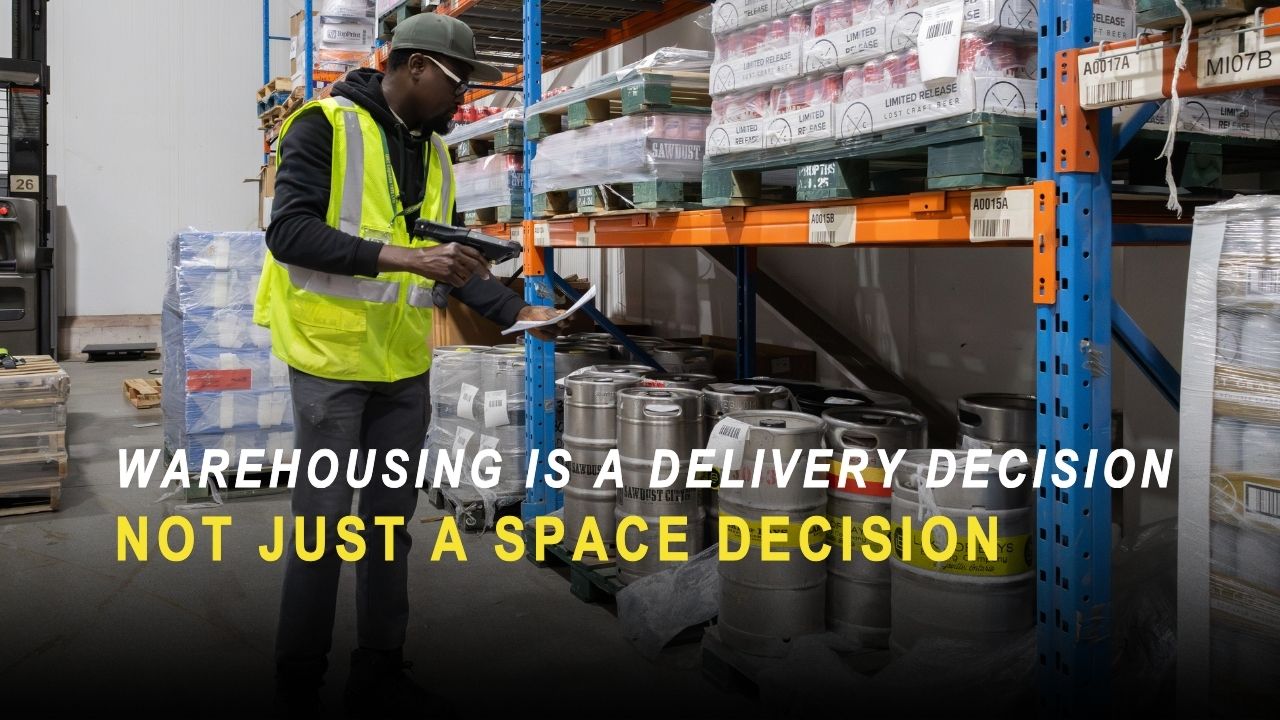
Beer warehousing in Toronto earns a serious look the moment storage starts hurting your inventory, your delivery timing, and your keg recovery.
So map your numbers first. Then, if you want storage tied to delivery, returns, and kegs, talk to us. We will map a Toronto-area setup that fits.